


Introduction
“Which irrigation system will help me save more water?” This is a common question among farmers. To find the answer, let’s dive deep into the common irrigation systems and learn about the most suitable irrigation method for Indian farms, which can significantly reduce water usage and enhance crop yields.
Which irrigation systems save water?
Sprinkler and drip irrigation are the two most widely used water-saving irrigation systems, each designed to maximise crop yield. Drip irrigation and sprinkler irrigation systems are the two most common irrigation types. Choosing between these two irrigation systems is quite challenging, as it depends on your land type, crop pattern, and weather conditions. Let’s break down these factors below.
1. Water usage efficiency
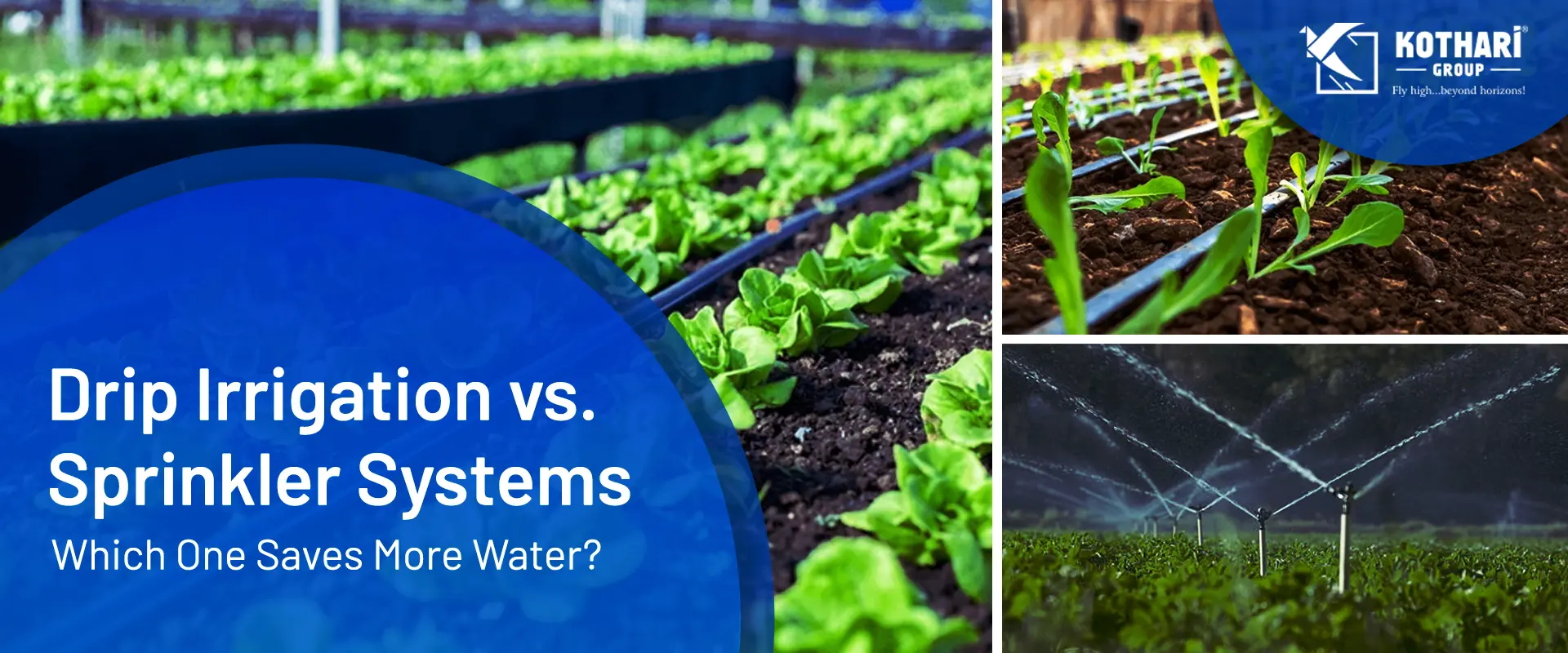
Drip irrigation systems provide water directly to the roots in a drop-by-drop manner. By utilising pressure regulators, drip irrigation ensures proper water delivery. This minimises water loss through evaporation or runoff, making it the best solution for efficient water management for agriculture. This irrigation method is popular in scarce water.
In contrast, sprinkler systems distribute water above ground level, creating a spray that simulates natural rainfall. However, this method tends to lose a considerable amount of water to evaporation, particularly in tropical areas.
2. Land type & atmosphere
The drip irrigation system is particularly effective for uneven terrains and dry landscapes. Whereas the micro sprinkler system is ideal for closely spaced crops. It thrives in a moderate climate and grows crops for vibrant leafy greens and lush lawns. It disperses water in a fine mist, promoting even coverage and encouraging healthy growth.
Expert tip: For soils that are loamy or sandy, implementing drip irrigation systems is recommended to control water seepage. In humid regions where moisture is abundant, micro sprinkler systems provide better performance, ensuring plants receive the right amount of hydration.
3. Maintenance & longevity
To optimise the effectiveness of drip irrigation systems, conduct regular flushing, especially with high mineral water, to solve the clogging problem. By using good-quality filters and robust PVC irrigation pipes tailored for agricultural applications, you can streamline maintenance procedures smoothly.
Sprinkler systems need routine maintenance and inspections, especially in dusty environments. By regularly checking the moving parts and keeping an eye on the nozzles, which can easily clog without proper filtration. You can enhance the longevity and performance of the system.
4. Cost factor
While setting up the drip irrigation system, it requires emitters, pressure filters, pipes and connectors. Hence, the initial cost of the drip system is higher compared to a sprinkler irrigation system. Additionally, various factors such as soil type, terrain, water quality and the farm size affect the cost factor.
A sprinkler irrigation system comes with a lower upfront cost, attracting smaller farm owners. You can upgrade the system by choosing from a mist sprayer, a micro sprinkler, a mini sprinkler or a pop-up sprinkler.
Both irrigation systems save on labour costs by automating the water and fertiliser delivery. Additionally, smart systems are used to regulate the flow of water.
5. Crop recommendation
Drip irrigation method is particularly effective for plants that require specific amounts of water to flourish, and the terrain where water flows down before being absorbed into the ground. Crops like tomatoes, grapes, cotton, chilli peppers, pomegranates, and sugarcane thrive on the drip irrigation method.
Sprinkler irrigation supports kharif crops such as soya bean, maize, sorghum, pulses and rabi crops like wheat, gram, and barley. These crops benefit from the even distribution of water provided by sprinklers.
Conclusion
So it’s clear that the drip irrigation system is the best water-saving irrigation system, suitable for Indian farms that deal with water scarcity or uneven terrain. But that doesn’t mean sprinkler systems serve less purpose.
At Kothari, we don’t just sell irrigation products; we empower farmers, educate them about crops and farm-related queries. We test drip vs sprinkler irrigation efficiency across Indian terrains, and provide insights on which irrigation is preferable for your farmland. With 40+ years of experience, we guide you to choose the irrigation system that best suits your purpose.
FAQs
1. Can I combine drip and sprinkler systems on the same land?
Yes, you can opt for Hybrid mode, where Kothari helps design the system for better efficiency.
2. How do I maintain a drip irrigation system?
You can maintain your drip irrigation system by regularly filtering, cleaning, checking for clogs, and using a pressure regulator.
3. Does climate affect irrigation system choice?
Absolutely. In hot and windy climates, drip irrigation performs better than sprinklers due to lower evaporation losses.