


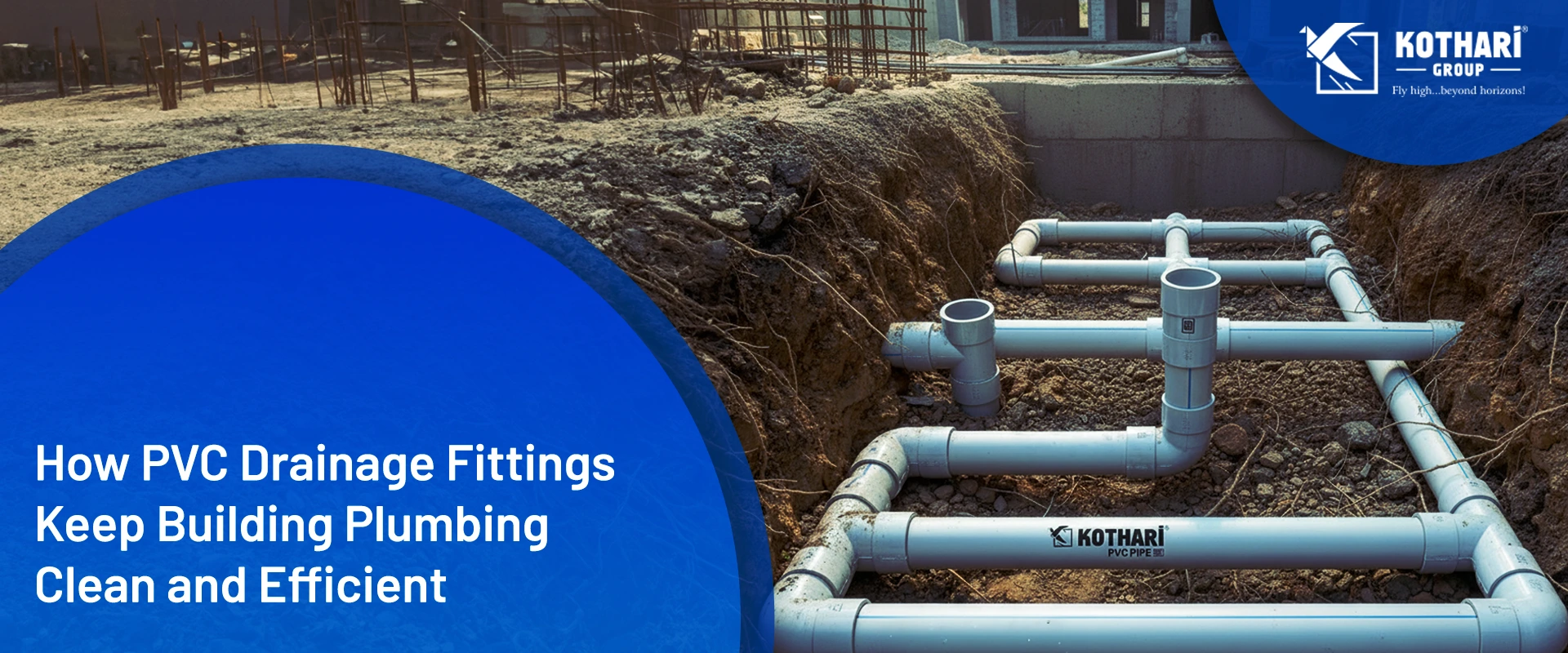
Efficient plumbing is essential for maintaining the health and sustainability of a building. Drainage infrastructure affects hygiene, occupant comfort, maintenance costs, and the durability of your home. Advanced PVC drainage systems and quality sanitary pipe fittings keep waste flowing, prevent contamination, and lower operational risks.
In any building, residential tower, commercial complex, or industrial facility, well-designed drainage piping improves hygiene and safety. Below are some benefits of using a PVC drainage system.
What Makes Modern PVC Drainage Systems So Effective?
Modern PVC drainage systems outperform traditional alternatives such as concrete or metal due to their unique material properties.
1. Smooth Surface
PVC pipes and fittings have a smooth inner wall. This lets wastewater flow quickly with little friction. The design helps keep the pipe clear. A smooth surface stops debris from sticking and building up. Over time, this means fewer blockages.
This is especially helpful in busy buildings where toilets, kitchens, laundry rooms, and other areas generate a lot of wastewater.
2. Chemical Resistance
Pipes made of PVC withstand exposure to various toxic substances like cleaning agents, acidic solutions, and waste materials. Unlike metal, PVC doesn’t corrode. It stays strong even with constant use. This strength reduces leaks, bad smells, and pollution in the ground, improving the hygiene in and around buildings.
Smooth, non-porous surfaces discourage microbial and biological growth. Biofilms or slime can’t easily build up, so foul odours and blockages are less likely to create problems.
3. Secure Joints
When wastewater escapes into the surrounding ground or building materials, mould often follows. Hidden moisture can lead to decay.
Starting strong with reliability, Kothari’s sanitary pipe fittings rely on two distinct joint types built for durability. One uses solvent welding, where a chemical adhesive fuses components tightly together. The other opts for rubber ring seals, made of pliable synthetic rubber that compresses into place. Built to endure, these methods form tight barriers against water loss over time. With their resilient build, leaks become rare, and soil moisture stays out.
4. Durability
Soil pressing down, water soaking through, roots pushing in – these are forces that hidden drainpipes face daily. Due to their ability to resist decay, a smooth inner wall, and a solid yet light build, underground drainage pipes handle such conditions without strain. Due to its durability, pipe breaking or wear is rare. This saves on costs and provides a smoother, cleaner water drainage system over time. What results stay out of sight but matter where foundations meet ground.
PVC Pipes and fittings hold up well where soil acidity is strong. That resilience becomes useful when groundwater levels run high or pollution lingers underground.
Check out Kothari’s Underground Pipe & Fittings.
Better Drainage Planning Improves Building Design
Poor drainage planning creates serious health risks, not just maintenance issues, such as:
- Bacterial proliferation thrives when water remains stagnant.
- Fumes along with dangerous vapours – sewer gas included – can move into areas where people live or work.
- Increases pest attraction around foundations
- Raises structural moisture and mould risks
A PVC drainage system moves wastewater away when fitted correctly. Hence, fittings must be tight so leaks do not happen.
Kothari’s Advantage in Drainage and PVC Fittings
In the places where hygiene matters most, the smooth flow of wastewater is important. Kothari’s drainage pipe comes with tight fittings, which prevent leakage. The durable PVC drainage components are built tough. These PVC pipes maintain a straightforward function across varied setups. Use trusted Kothari Group underground drainage pipe and plumbing pipe fittings for reliable results.
Conclusion
Proper drainage is more than a core requirement; it’s hygiene infrastructure. Sanitary pipe fittings that prevent contamination and PVC drainage pipes are built for long-term and heavy wastewater usage. It ensures a strength that supports consistent results across projects. Whereas underground pipes designed for smooth flow, leak resistance, and longevity create safer environments for occupants.
FAQs
1. Why do modern buildings use PVC drainage systems?
PVC pipes usually have a smooth surface, which lets out the waste easily, and clogs happen rarely.
2. How do PVC sanitary fittings help keep things clean?
The PVC pipe and fittings are sealed tightly, so water leakages dont happened. It also keeps the bad smell and bacteria far away.
3. Can PVC pipes be used underground?
Yes, you can use PVC pipes for underground usage as they are capable of withstanding severe wastewater pressure and a tight fit.
4. How do pipe fittings affect waste flow?
The tight fitting prevents water leakage, and the smooth surface lets out the wastewater without clogging.
5. How long do PVC pipes and fittings last?
When installed correctly, they can last 50 years or longer. They resist damage from rust, chemicals, and daily wear, making them dependable for any building.